Quinn Koch · 22 September 2026
Shellfish Farmers Trial Floating Garden Systems to Buffer Against Tidal Shifts
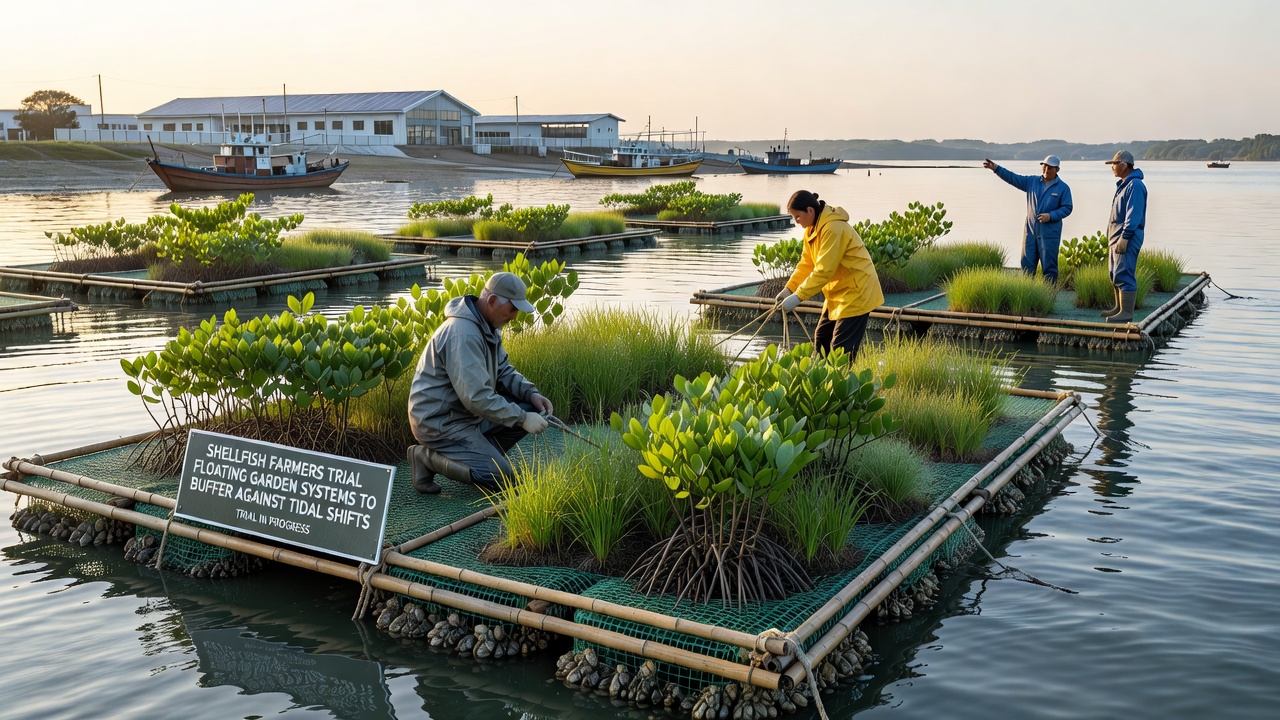
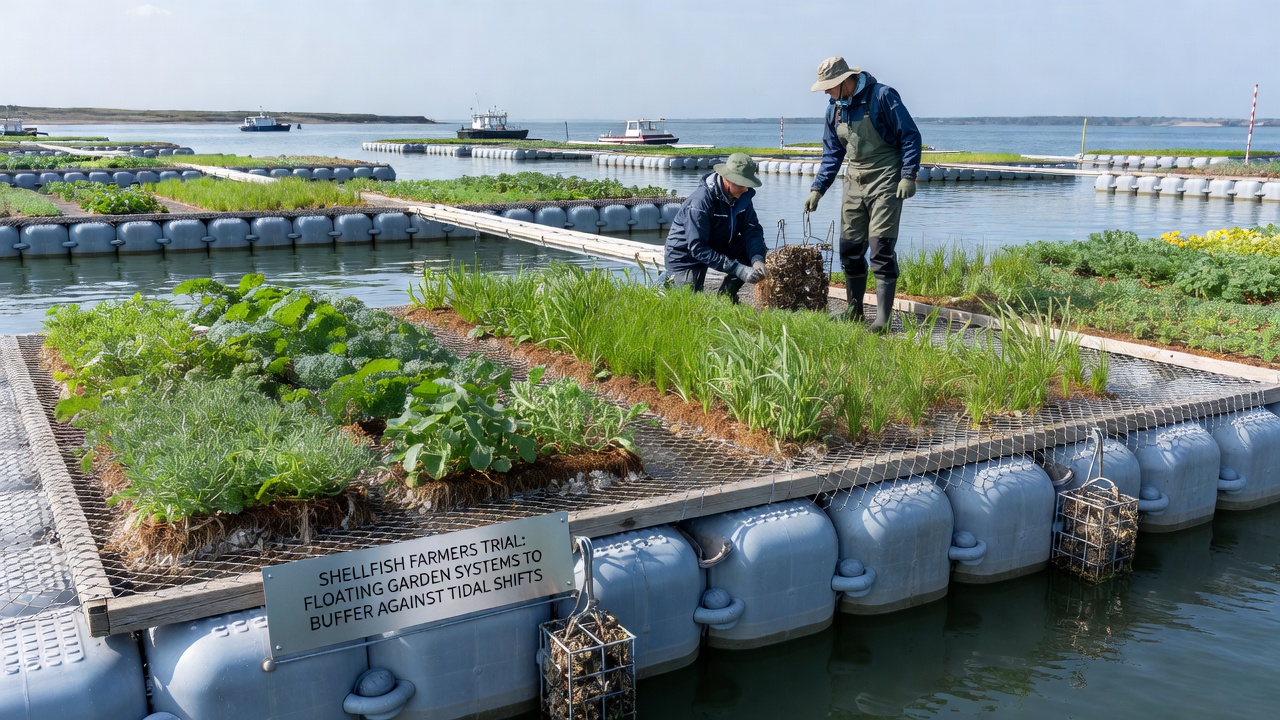
Shellfish farmers along several coastlines have begun testing floating garden systems as a method to stabilize production amid changing tidal patterns, and these setups combine suspended platforms with integrated algae and shellfish cultivation zones that rise and fall with water levels while maintaining consistent growing conditions for oysters, mussels, and clams.
How Floating Garden Systems Function
Engineers design the platforms with buoyant frames made from recycled materials and anchored lines that allow vertical movement without detaching from the seabed, while mesh enclosures hold juvenile shellfish and permit water flow that delivers nutrients and removes waste, and researchers note that this configuration reduces exposure to extreme low tides which can strand beds and cause mortality during prolonged dry periods.
Data from initial deployments shows that the systems maintain submersion depths between 0.5 and 2 meters even when tidal ranges shift by 30 percent or more, and this stability supports continuous feeding cycles that traditional fixed racks cannot match under variable conditions.
Regional Trial Locations and Timelines
Trials have expanded across multiple sites since 2023, with operations in the Pacific Northwest of the United States, the Bay of Fundy in Canada, and coastal zones near Tasmania in Australia, where each location contributes different tidal data sets that help refine platform designs for local current speeds and sediment loads.
In September 2026 a new phase of expanded testing will launch in the Gulf of Maine, incorporating sensor arrays that track pH levels, temperature fluctuations, and biomass growth rates in real time, and project leads expect these instruments to generate datasets covering at least 18 consecutive months of tidal cycles.
Observed Performance Metrics
Early results indicate that floating gardens can increase survival rates for oyster spat by 22 to 35 percent compared with ground-based beds during periods of amplified tidal amplitude, while harvest weights per square meter have risen in monitored plots because the platforms reduce burial by shifting sands and allow farmers to adjust stocking densities without manual repositioning.
According to NOAA aquaculture reports, similar modular approaches have shown promise in mitigating the effects of king tide events that have become more frequent in the past decade, and the agency continues to compile comparative data from participating farms.
Integration with Existing Aquaculture Practices
Farmers integrate the floating units into established lease areas by linking them to existing mooring buoys, which allows crews to monitor multiple gardens from a single vessel and reduces fuel costs associated with repeated site visits, and the modular nature of the frames permits quick scaling when tidal forecasts predict larger ranges during storm seasons.
Studies conducted by the Commonwealth Scientific and Industrial Research Organisation in Australia have documented how algae components within the gardens absorb excess nutrients that otherwise accumulate under static culture methods, thereby improving water quality around the platforms and supporting higher densities of filter-feeding shellfish.
Technical Adjustments and Maintenance Requirements
Operators perform seasonal inspections to check anchor line tension and replace biofouled mesh panels, tasks that require less physical labor than traditional bed maintenance because the platforms can be winched to the surface for cleaning, and this accessibility has lowered injury rates among workers who previously handled heavy equipment in shallow, uneven terrain.
Equipment suppliers have developed standardized kits that include quick-release connectors and corrosion-resistant hardware, and these components address the specific demands of repeated tidal cycling while keeping overall system costs within reach of mid-sized operations.
Conclusion
Shellfish farmers continue to refine floating garden systems through ongoing field data collection and cross-regional collaboration, and the approach provides a practical response to documented shifts in tidal behavior that affect production consistency across multiple coastlines. Continued monitoring through 2026 and beyond will supply additional evidence on long-term durability and economic returns.