Mara Beck · 3 November 2026
Elderly Residents Compile Handwritten Tide Logs Spanning Five Decades to Assist Researchers Studying Subtle Shifts in Local Current Patterns
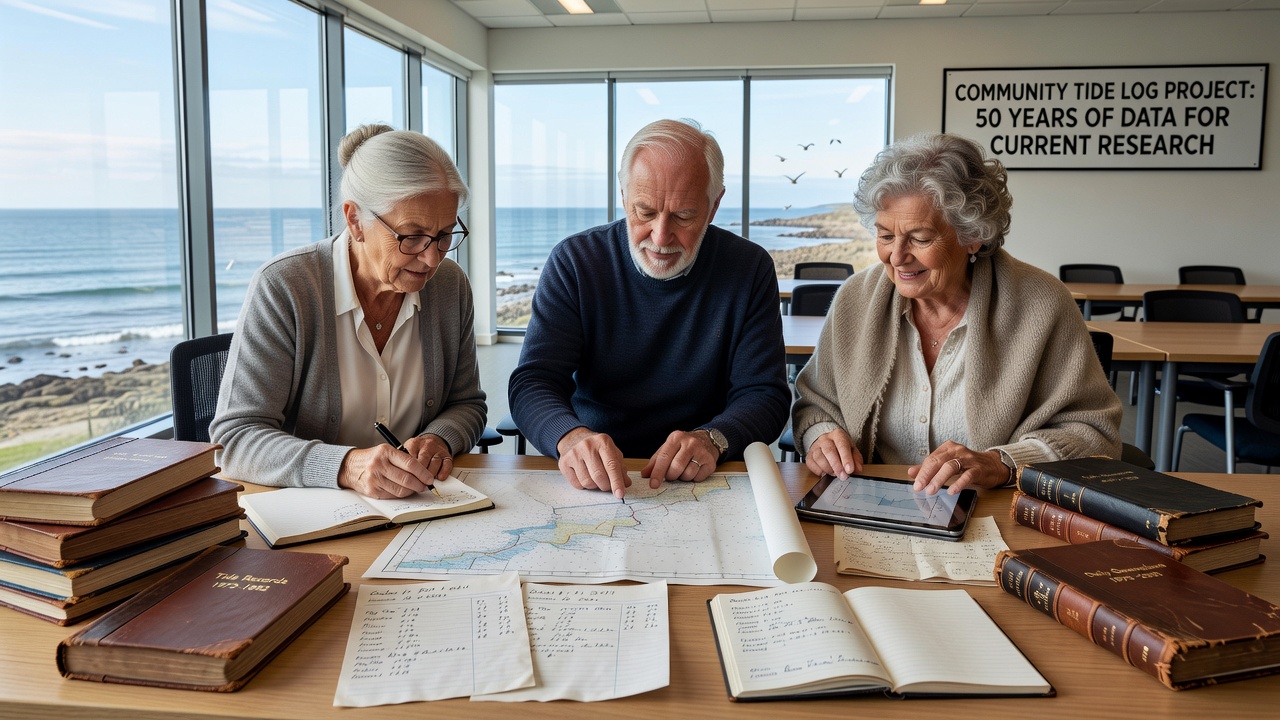
Coastal communities have long relied on consistent observation of tidal movements, and a group of elderly residents in one such area has maintained detailed handwritten records that now span more than fifty years, providing researchers with continuous datasets on local current patterns. These logs began in the mid-1970s when several individuals started noting daily high and low tides along with observations of water flow direction and speed using simple instruments available at the time. Over the decades the practice continued without interruption, creating a single unbroken sequence that captures gradual changes in timing, height, and velocity.
Origins of the Logging Effort
The initial participants worked as fishers, boat builders, and harbor workers who needed reliable information for daily operations, yet they recorded measurements beyond immediate practical needs and included notes on wind influence, water clarity, and seasonal variations. By the early 1980s the group had formalized a rotation schedule so that at least one observer visited the same reference points each day, ensuring consistency across entries. Handwritten pages filled bound ledgers that were stored in climate-controlled community spaces to prevent deterioration, and volunteers later transcribed portions into digital spreadsheets while preserving the originals for verification.
Data Characteristics and Scope
Each entry typically includes time of observation, tide height relative to a fixed benchmark, estimated current speed in knots, and directional indicators such as compass bearings or landmarks. The dataset now exceeds eighteen thousand daily records, covering multiple lunar cycles, El Niño and La Niña episodes, and several major storm events. Researchers from regional oceanographic institutions have accessed the material through supervised visits, comparing it against automated gauge readings installed in the 1990s and satellite altimetry products that became available later. Discrepancies between handwritten notes and electronic instruments have prompted recalibration of certain models, particularly for nearshore zones where bathymetry creates complex eddies.
Integration with Modern Research
University teams specializing in coastal dynamics began incorporating the logs into broader studies around 2015, focusing on decadal trends rather than short-term forecasts. Analysis revealed a measurable shift in the timing of peak flood currents by approximately twelve minutes over the full record, along with a slight increase in average velocity during spring tides. These findings align with independent measurements reported by the National Oceanic and Atmospheric Administration through its tide and current prediction programs, although the handwritten series offers higher temporal resolution in one specific inlet. Additional cross-checks with data from the Australian Bureau of Meteorology’s oceanographic archives have helped place local observations within larger regional circulation patterns.
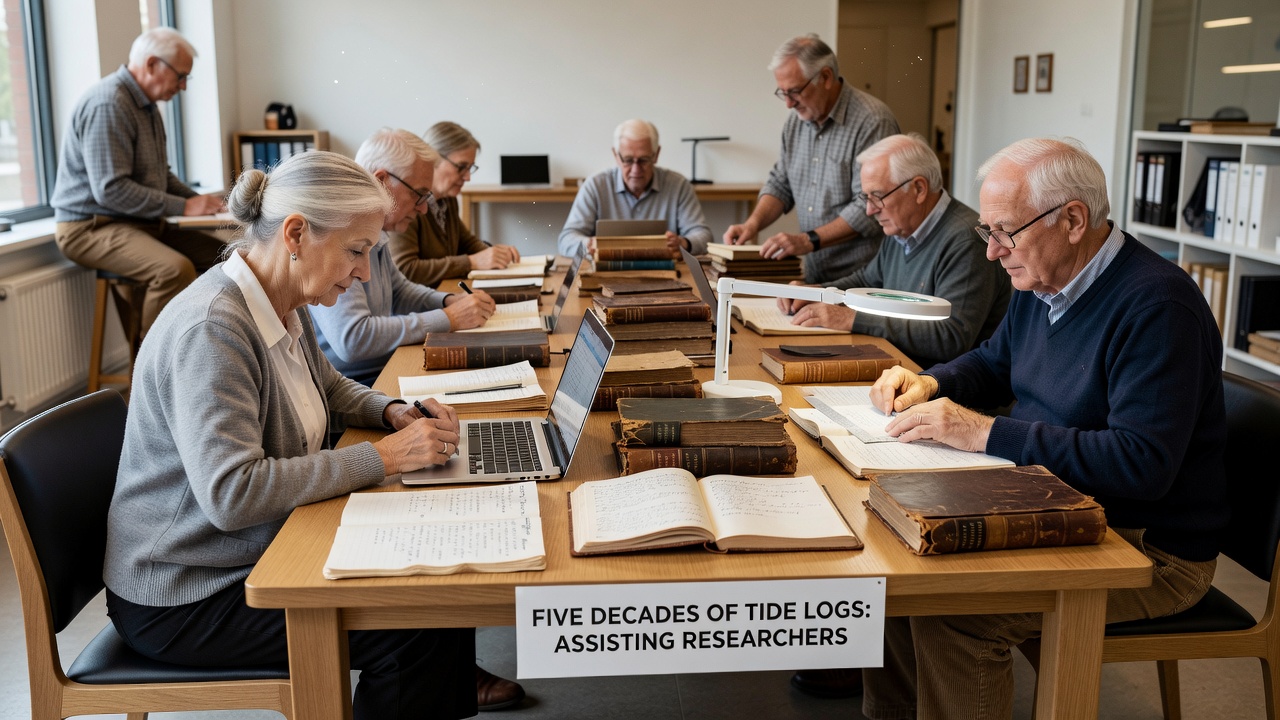
Collaboration expanded in 2023 when a joint project digitized the full collection and applied machine-learning techniques to extract quantitative values from marginal notes that had previously been treated as qualitative. The resulting database now feeds into hydrodynamic simulations that test how small changes in current speed affect sediment transport and larval dispersal. Observers note that the original recorders rarely used scientific terminology yet consistently described phenomena such as “the water running harder against the south jetty after a nor’easter,” language that researchers have mapped onto measurable parameters.
Community Involvement and Knowledge Transfer
Younger residents have joined the effort in recent years, learning the observation protocols directly from the original compilers during weekly gatherings. Training sessions cover instrument calibration, safety procedures for accessing exposed observation points, and methods for maintaining legibility in adverse weather. Several schools have incorporated visits to the archive into environmental science curricula, allowing students to compare older entries with contemporary sensor output. By November 2026 the project expects to complete a public-facing online portal that will display selected excerpts alongside interactive visualizations of long-term trends, although physical ledgers will remain the primary reference for verification.
Broader Applications and Future Outlook
Similar citizen-science initiatives operate in other coastal regions, yet few match the continuous five-decade span achieved here. The logs have already contributed to peer-reviewed papers examining the interaction between tidal currents and changing wind regimes, and planners have referenced the data when evaluating infrastructure resilience. Continued collection will extend the series into the coming decades, supplying a rare baseline against which future alterations can be assessed. Researchers emphasize that the combination of human persistence and detailed notation has produced a resource that complements rather than duplicates automated systems, filling gaps in coverage during periods when electronic equipment required maintenance or replacement.
Conclusion
The handwritten tide logs compiled over five decades represent a sustained community contribution to oceanographic understanding, supplying researchers with fine-scale observations of current pattern evolution that automated networks alone cannot fully replicate. Ongoing digitization and intergenerational participation ensure the dataset remains accessible and continues to grow, supporting studies of coastal processes well into the future.